Clinical teaching case

Severe Locked Right Ring Trigger Finger

A fixed flexion deformity treated with the Vijitpornkul Blade Probe Technique, documented from the untreated hand through the procedure, immediate movement and follow-up.

Right ring fingerSevere lockingFlexion deformityMinimally invasive release

Why this case matters

Severe trigger finger is more than a click. A digit may become locked with a persistent flexion deformity, disturbing grip, hand opening and the normal digital cascade. This case demonstrates how the mechanical block was assessed and released, with movement checked immediately afterward.

Case-based evidence

The photographs and videos show this patient’s visible progression. They do not prove that every severe trigger finger should receive the same procedure or predict another patient’s result.

Step 1

Untreated presentation

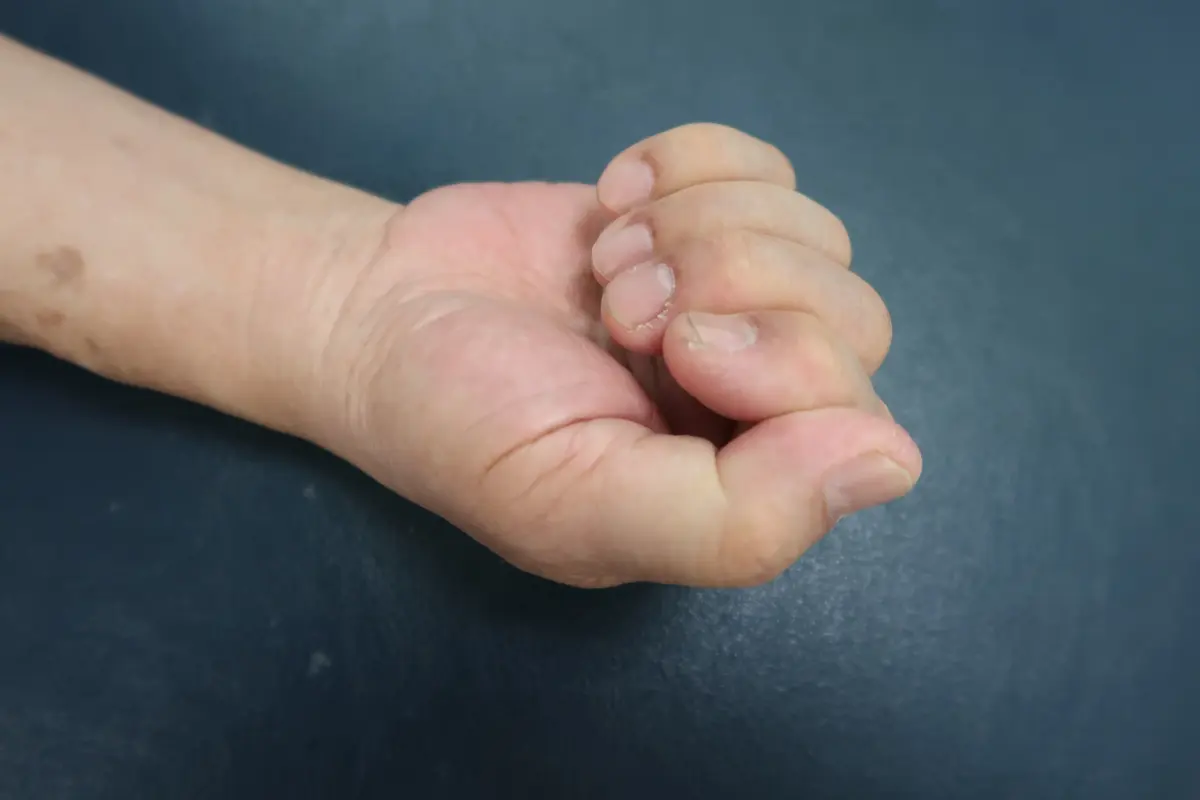
The right ring finger remains flexed and cannot join normal hand opening. Full fist formation increases the lock, and the finger shows a visible flexion deformity.
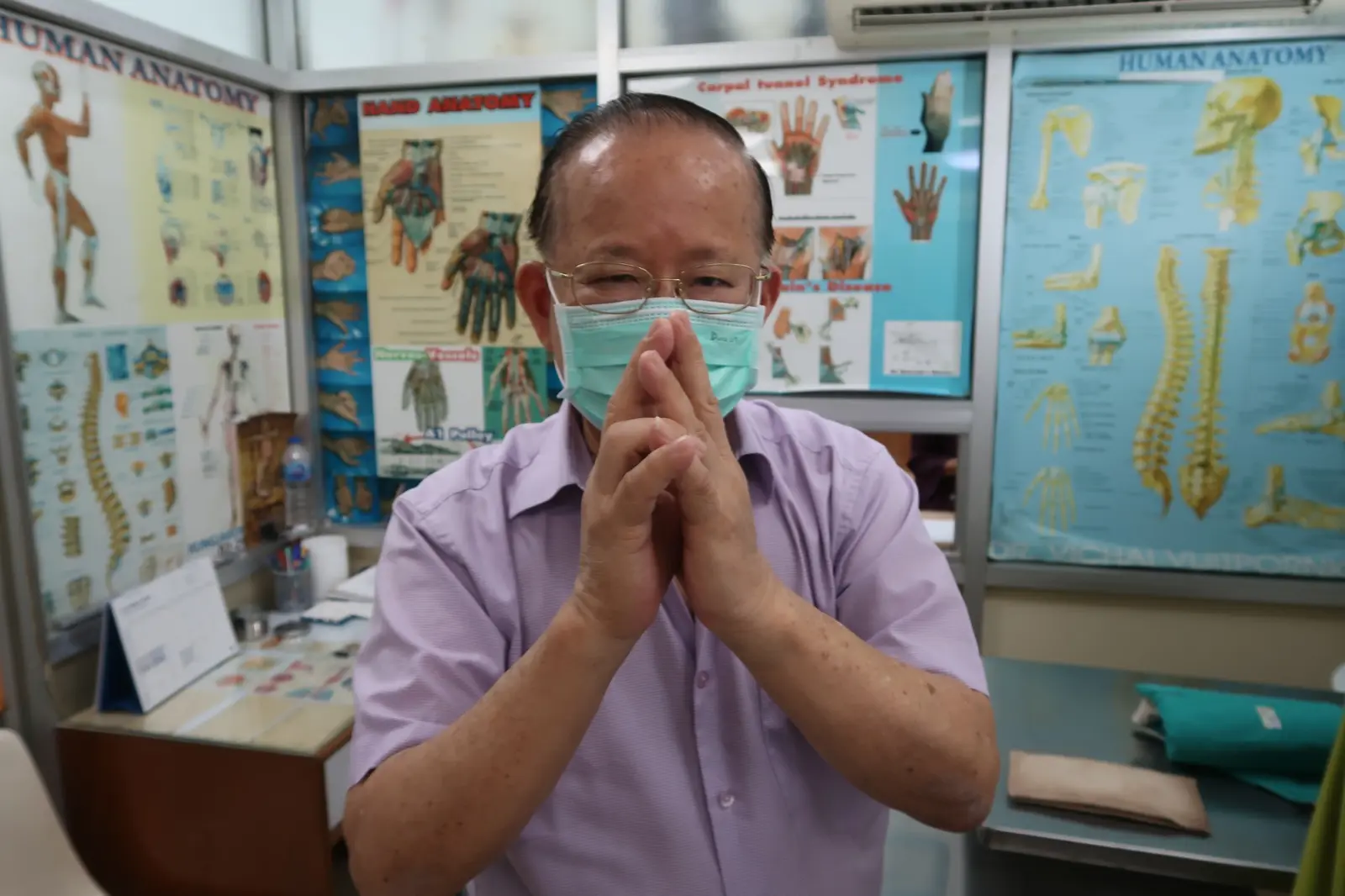
Patient demonstrating the untreated right ring-finger flexion deformity with both hands together
Overall appearance before treatmentThe affected right ring finger cannot align normally with the opposite hand, making the flexion deformity clearly visible.
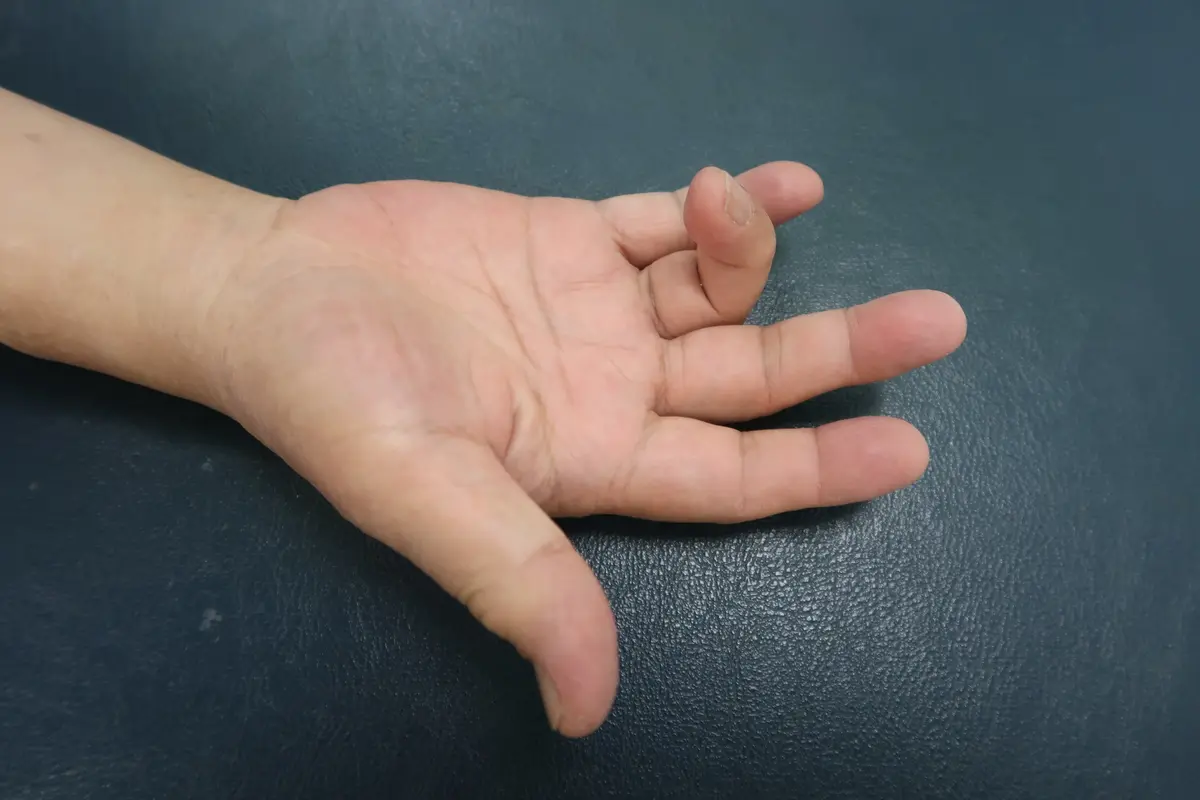
Untreated right hand with ring finger held in flexion
Locked ring fingerResting posture demonstrates persistent flexion of the affected digit.
Untreated right hand during fist formation
Locking during gripThe ring finger remains trapped during composite flexion.
Dynamic close-up before treatmentMovement reveals the fixed lock more clearly than a still photograph.
Whole-hand movement before treatmentCompare the affected ring finger with the neighboring digits during opening and closing.
Step 2

Assessment and treatment endpoint

In a severe locked digit, the clinician must distinguish mechanical tendon-sheath obstruction from secondary joint stiffness and other causes of flexion deformity. The release is considered complete only after safe, unrestricted tendon excursion is demonstrated.

1

Palpate

Feel the tendon and constricting region during passive movement.

2

Release selectively

Divide only the obstructing tissue with controlled depth and direction.

3

Confirm motion

Recheck passive glide and the patient’s active flexion and extension.

Step 3

Blade Probe treatment

The Blade Probe was used through a small puncture to release the obstructing pulley tissue. Tactile feedback and movement testing guided the endpoint rather than relying on a predetermined cutting length.
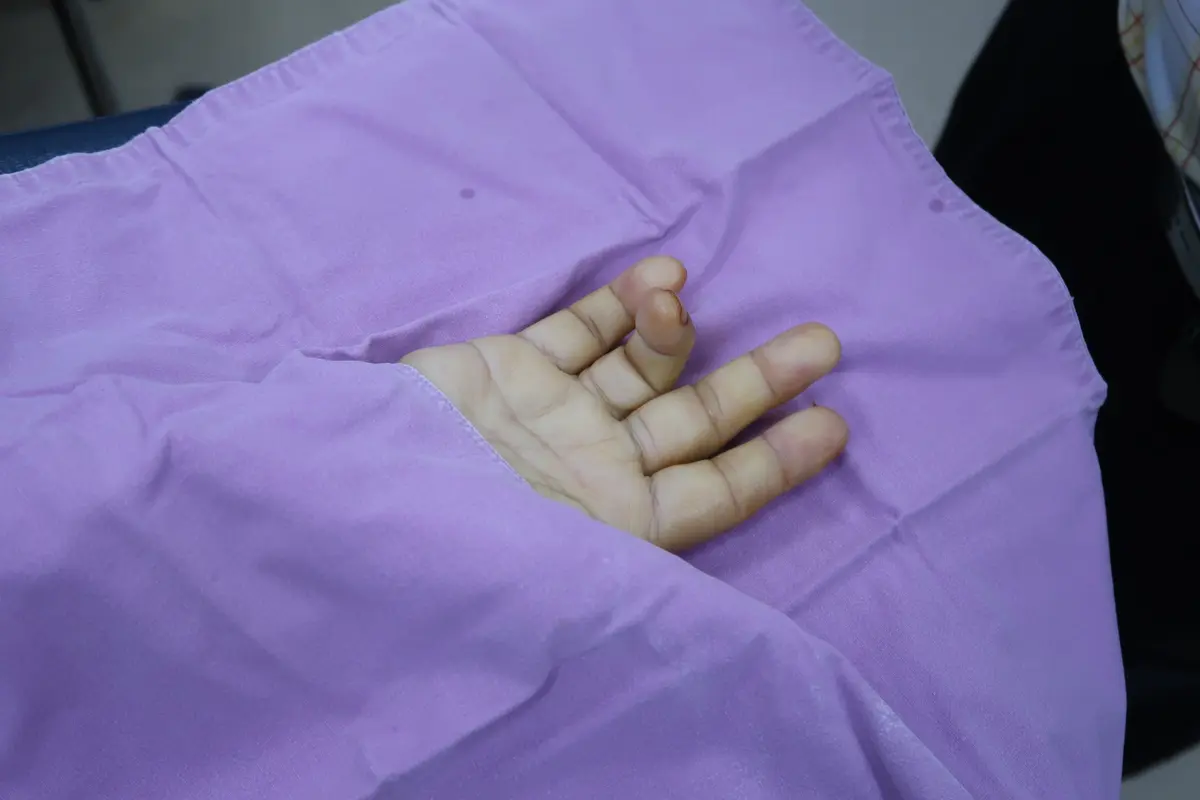
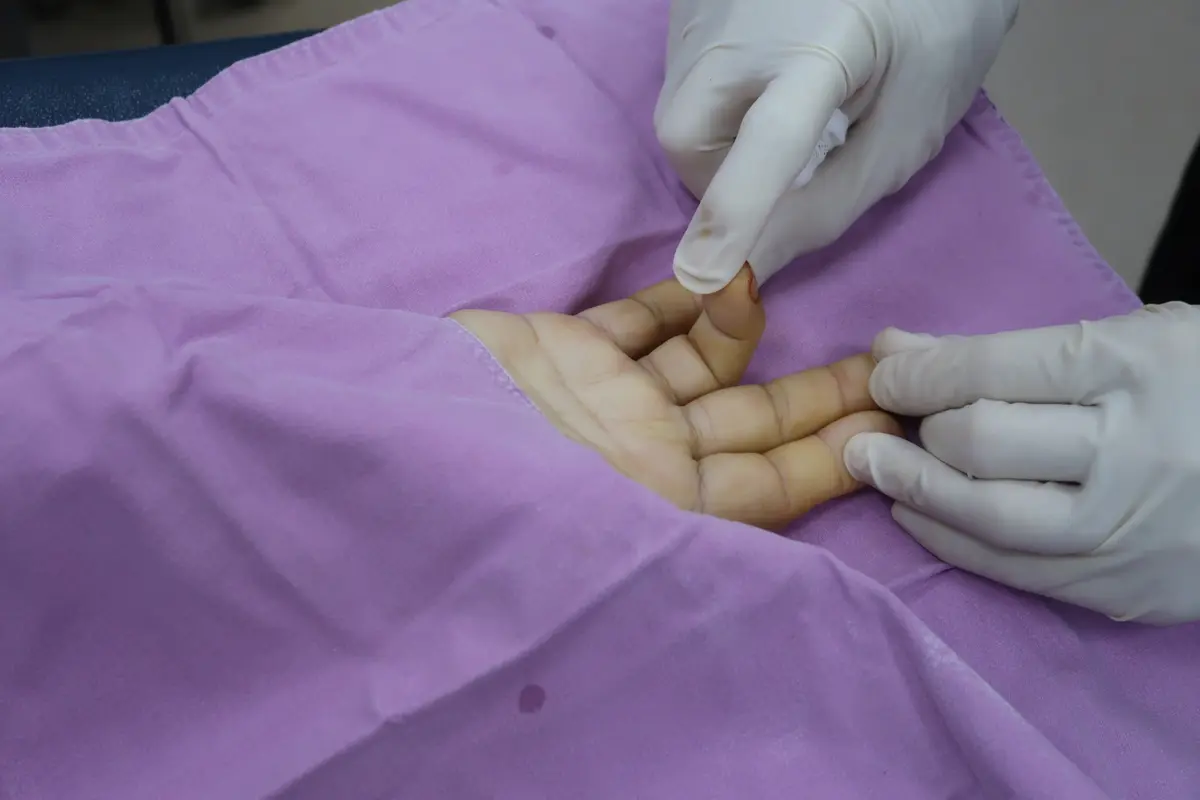
Clinical procedure footage: This material is provided for professional education and is not an instruction for unsupervised treatment.
Right hand prepared and draped for procedure
Sterile preparationThe hand is positioned for controlled access to the affected flexor passage.
Blade Probe procedure on right ring trigger finger
Minimally invasive releaseThe obstructing tissue is approached through a small puncture.
Procedure and movement checkingThe historical footage shows treatment and reassessment of ring-finger excursion.
Step 4

Immediate result

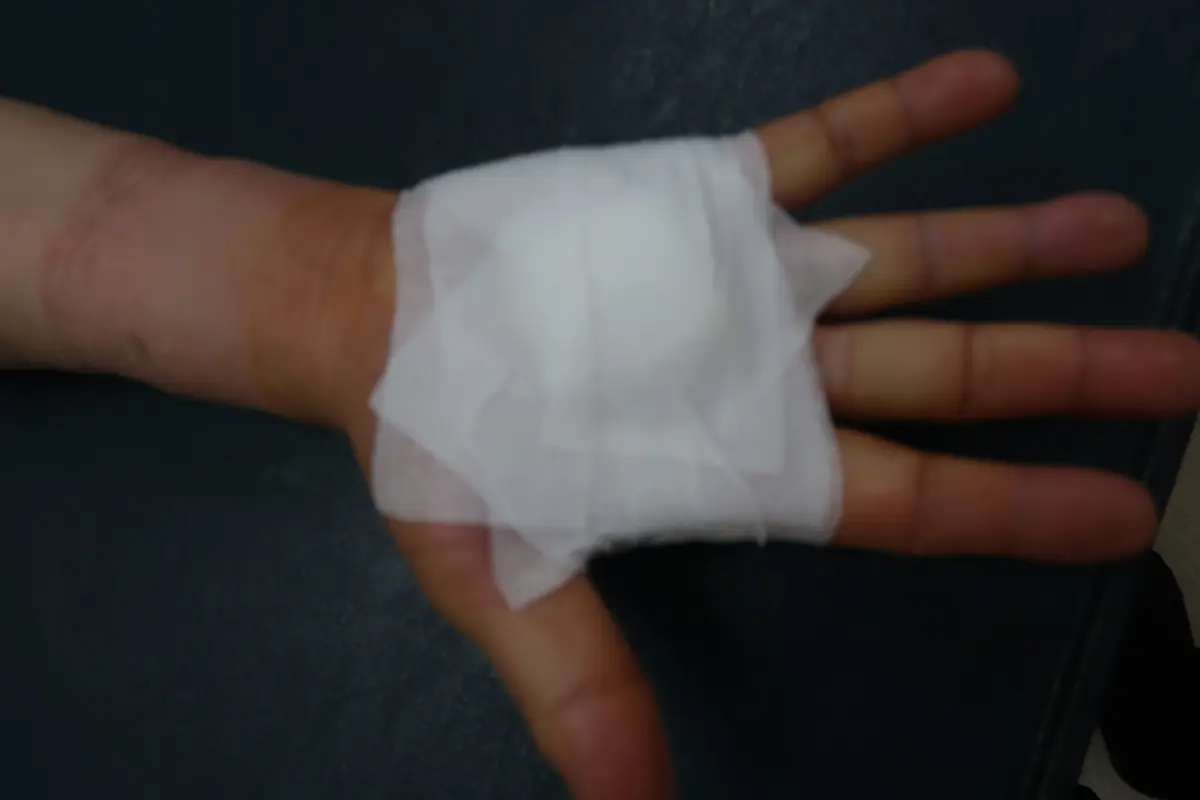
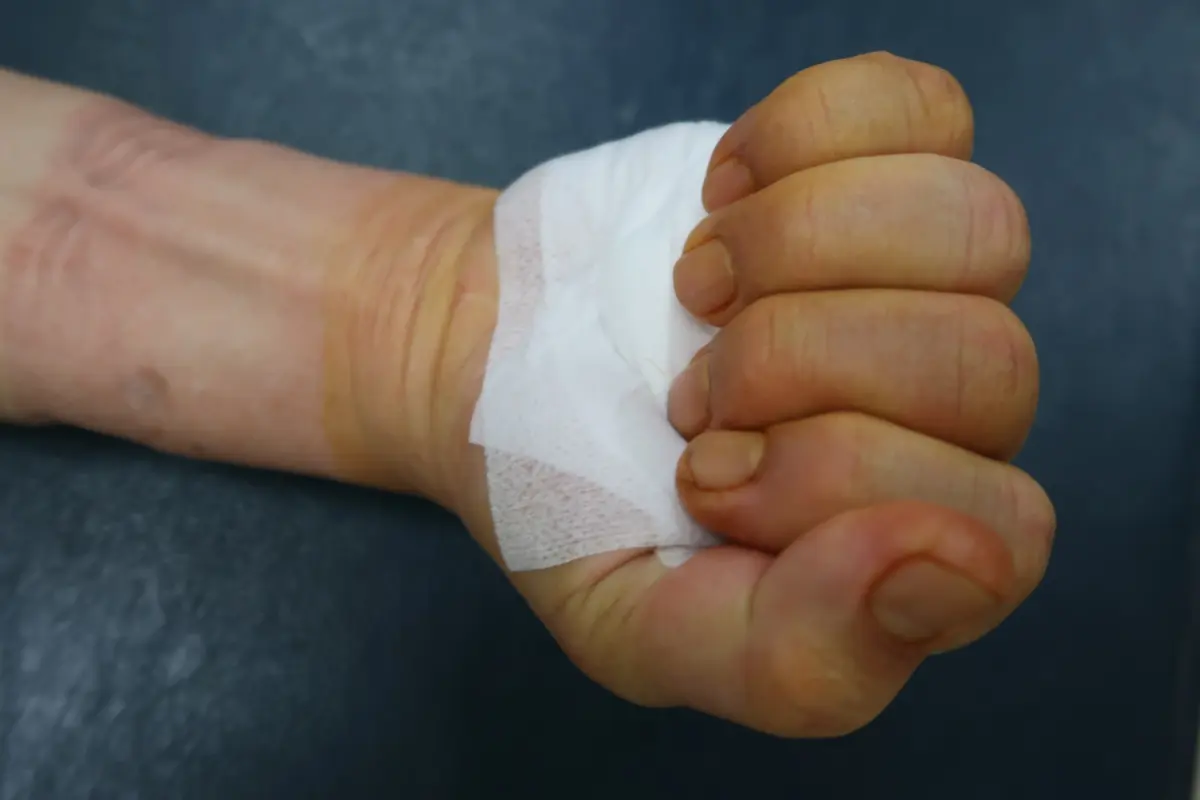
After treatment, the patient demonstrates active opening and composite flexion despite the dressing. The former fixed ring-finger posture is no longer visible in this immediate examination.
Open right hand with dressing after Blade Probe treatment
Immediate openingThe ring finger joins the extended digital cascade.
Closed fist with dressing after Blade Probe treatment
Immediate fistComposite flexion is demonstrated after release.
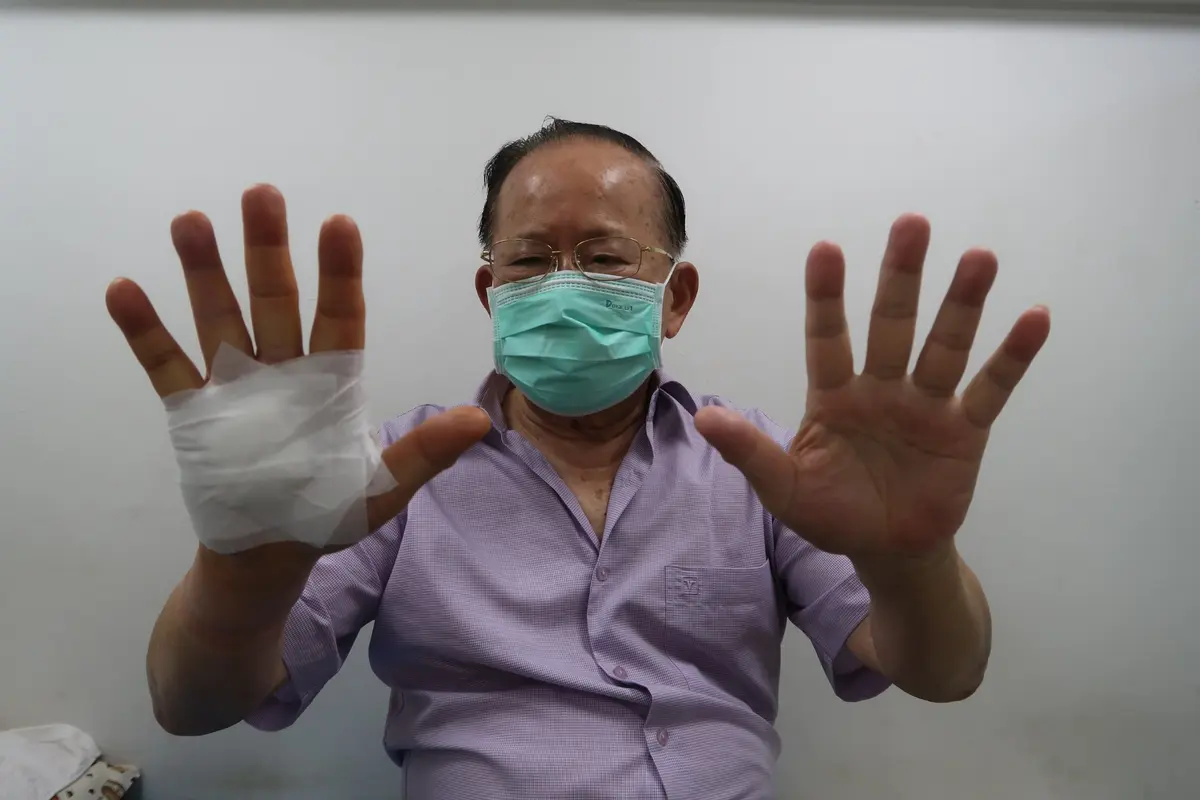
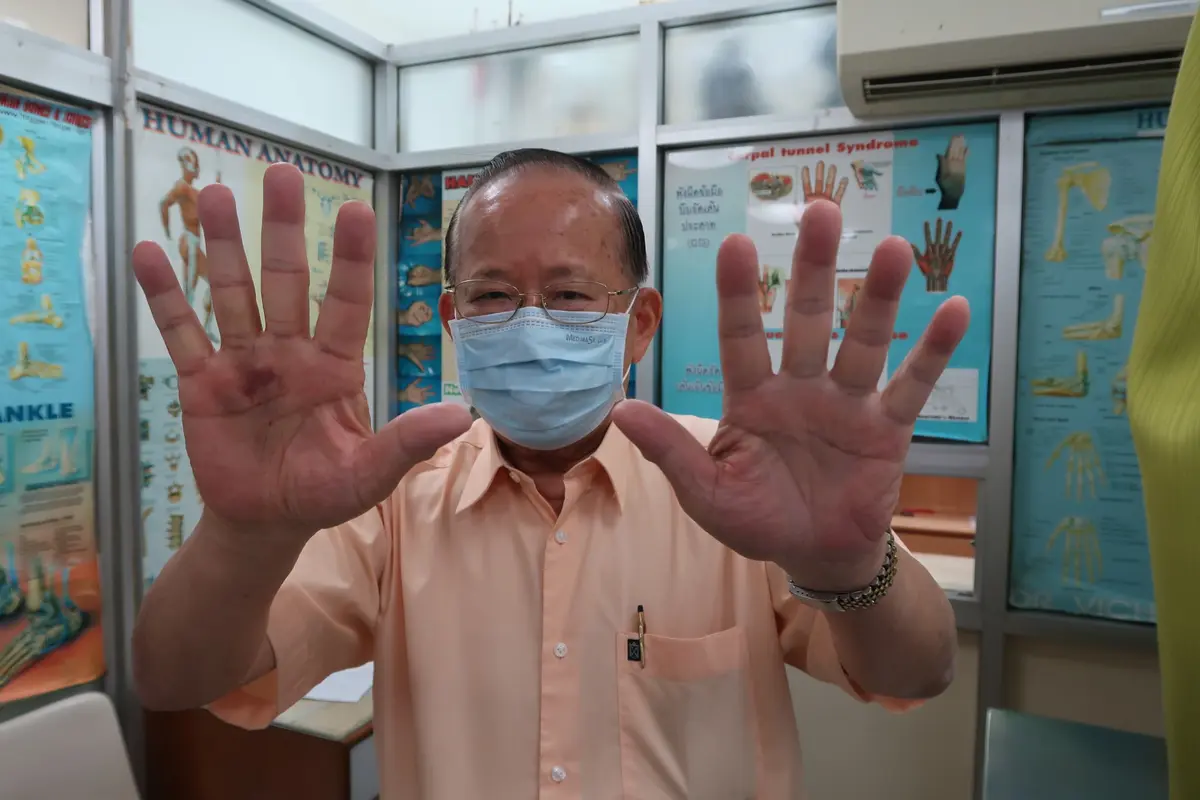
Patient showing both hands open after treatment
Active extensionThe patient compares the treated hand with the opposite side.
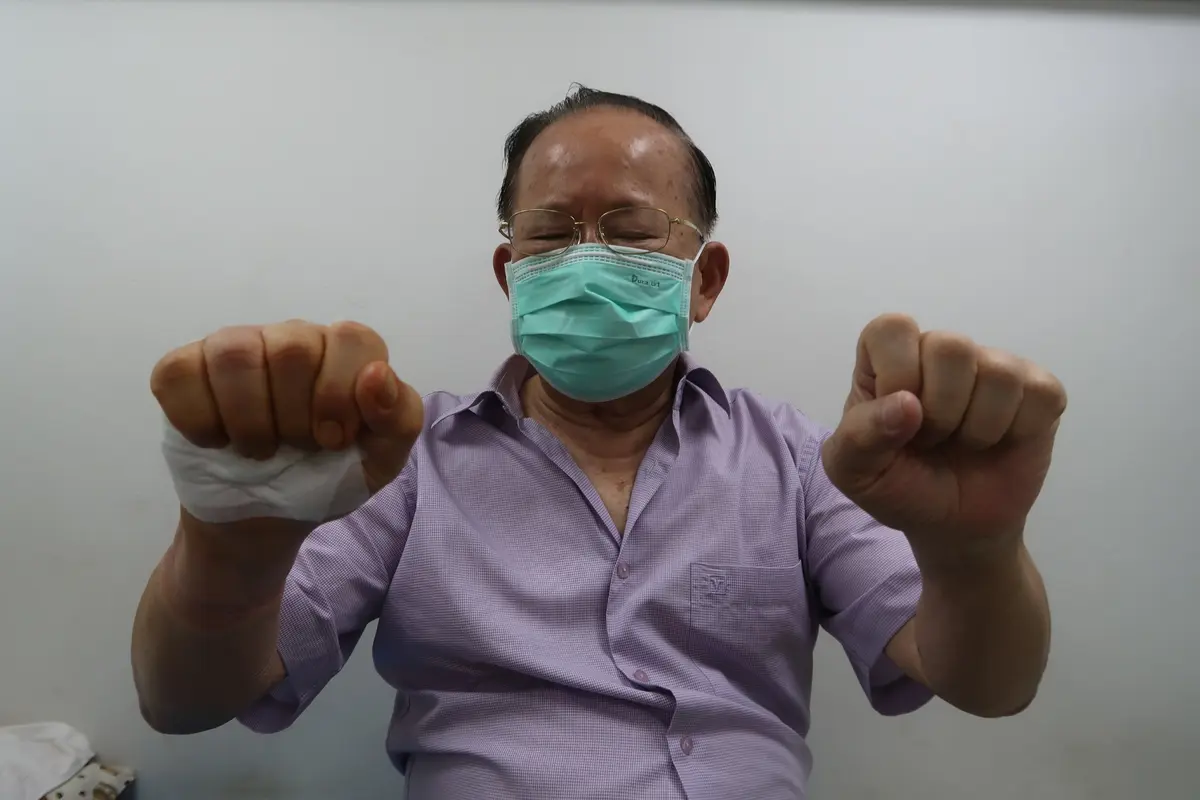
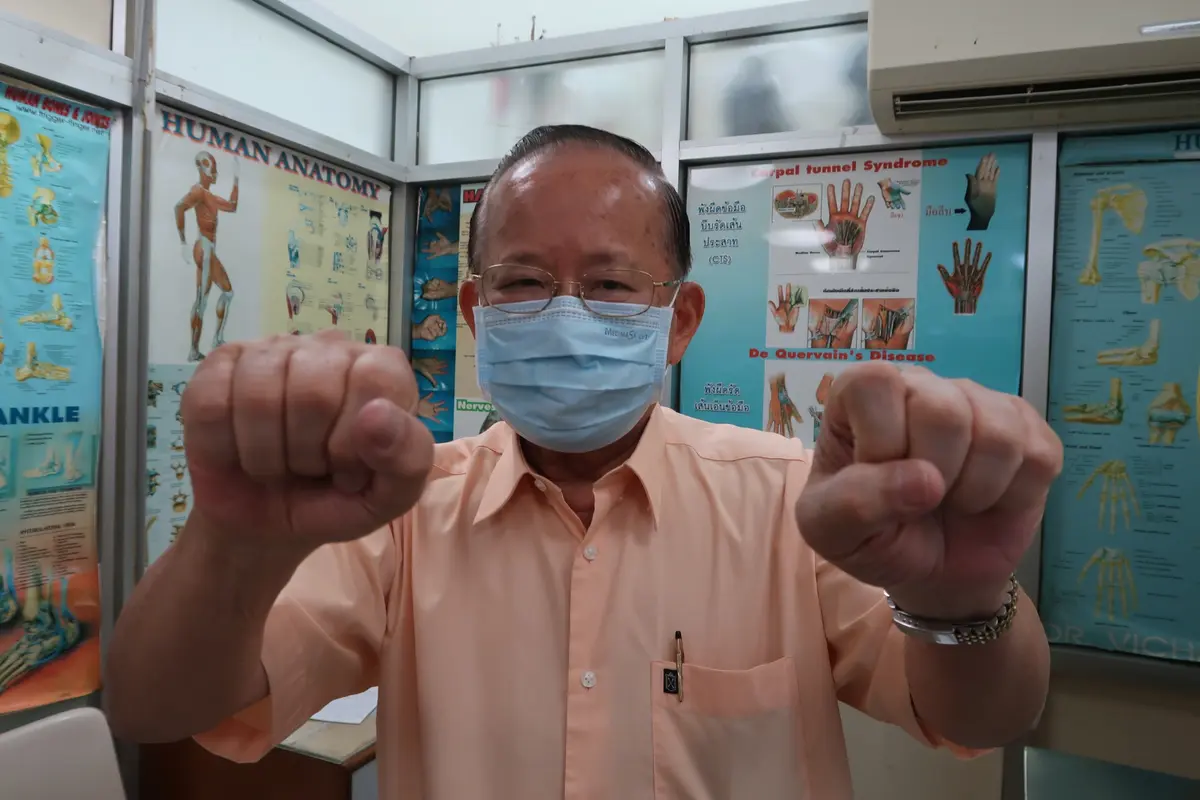
Patient showing both fists after treatment
Active flexionBoth hands form a fist during the immediate check.
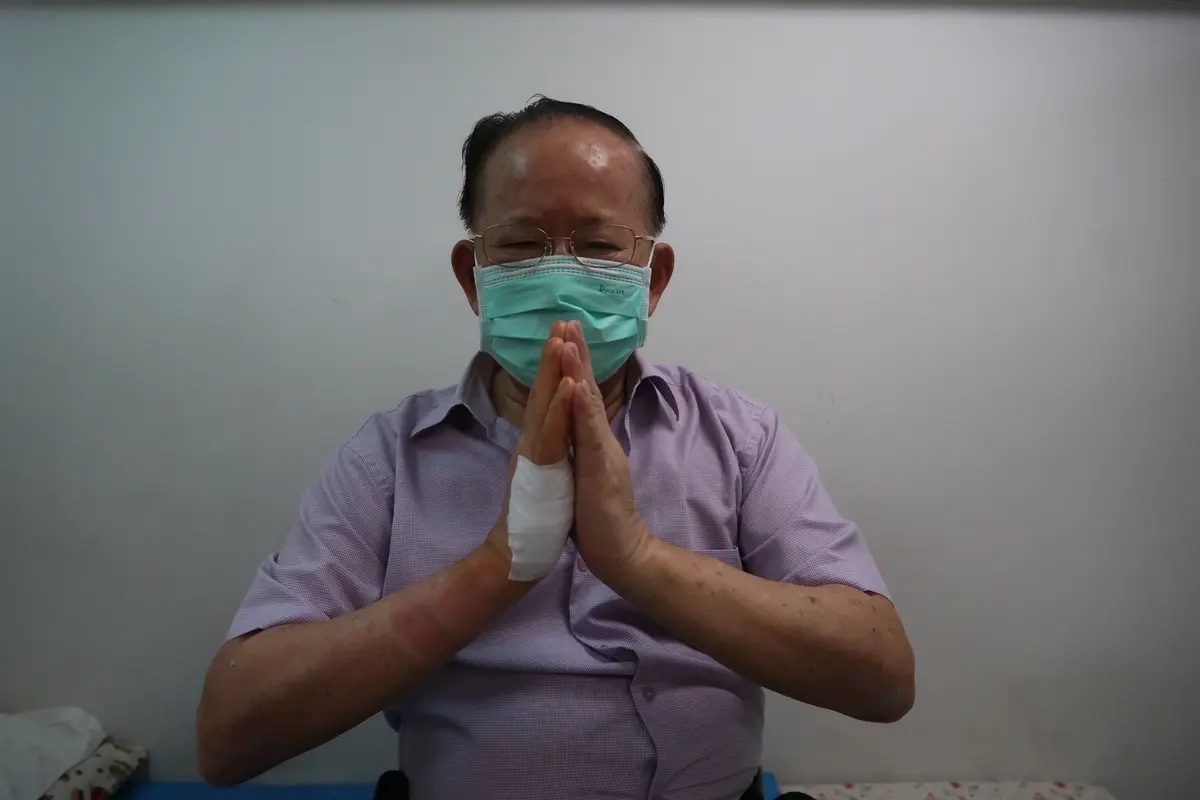
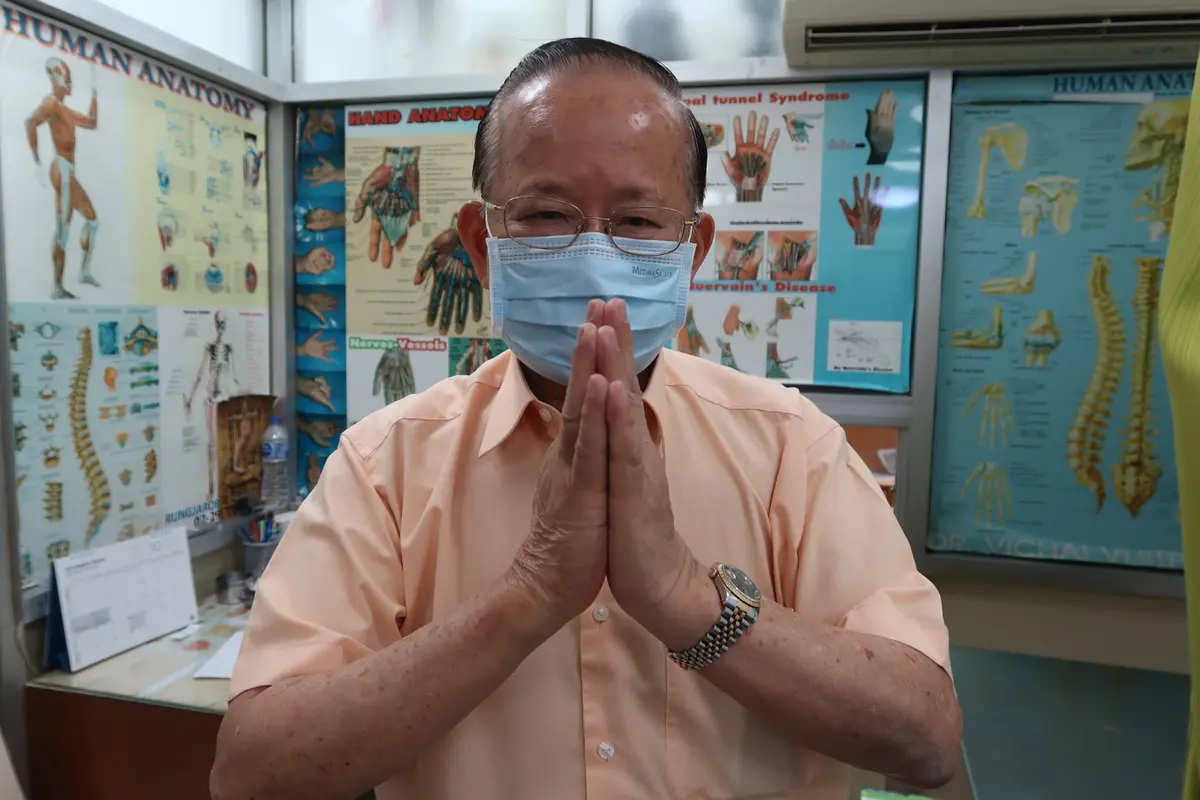
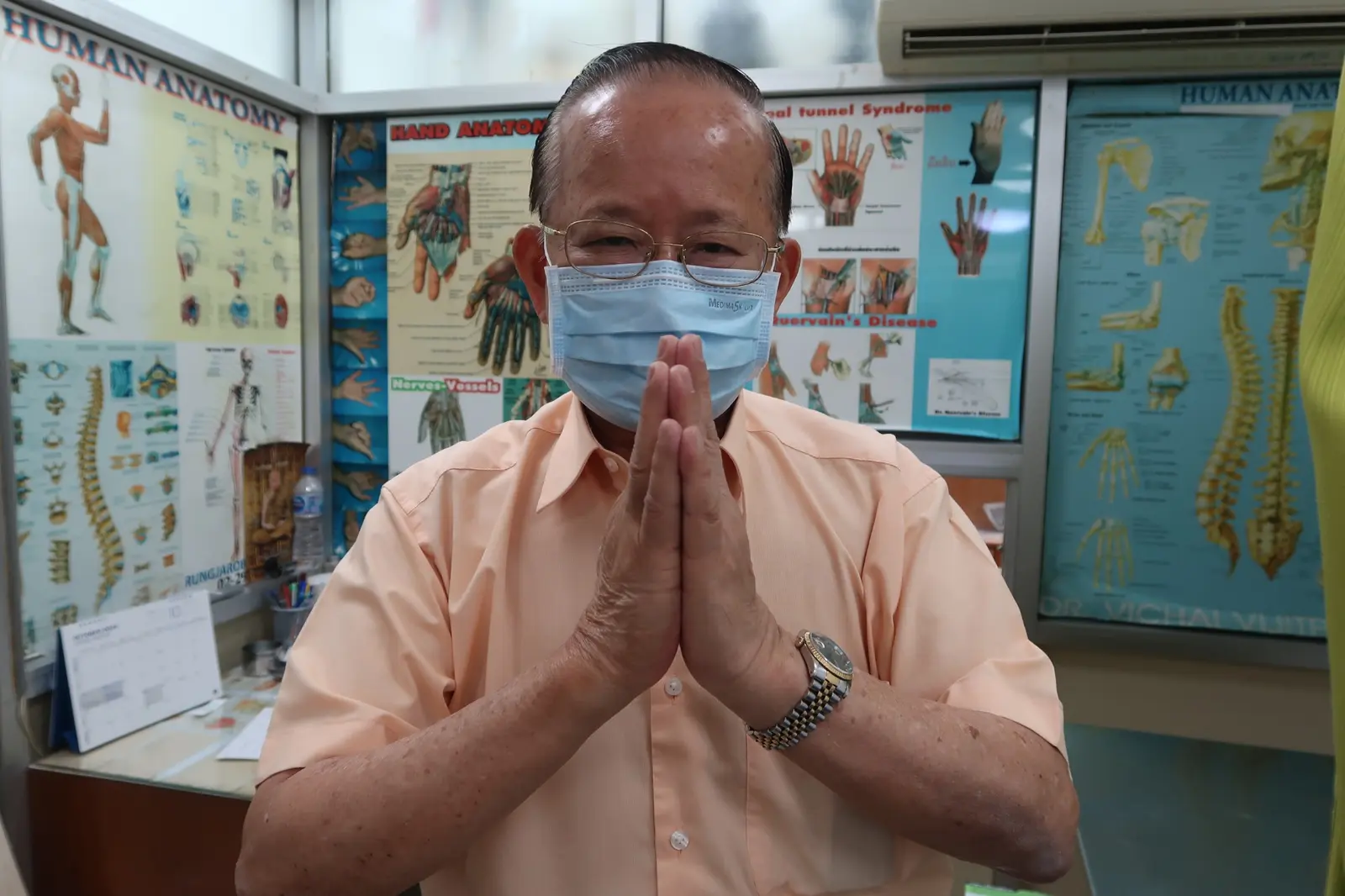
Patient showing palms together after treatment
Functional hand positionVisible early restoration of ring-finger alignment.
Step 5

Follow-up

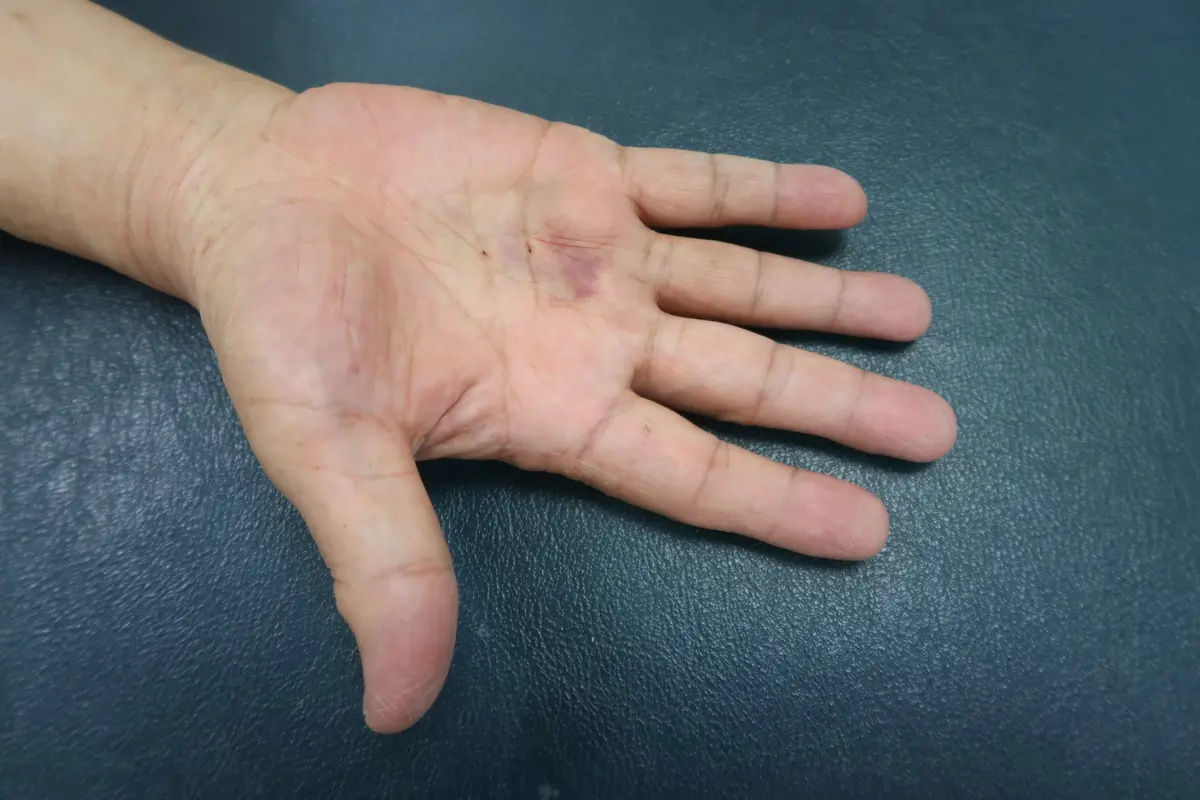
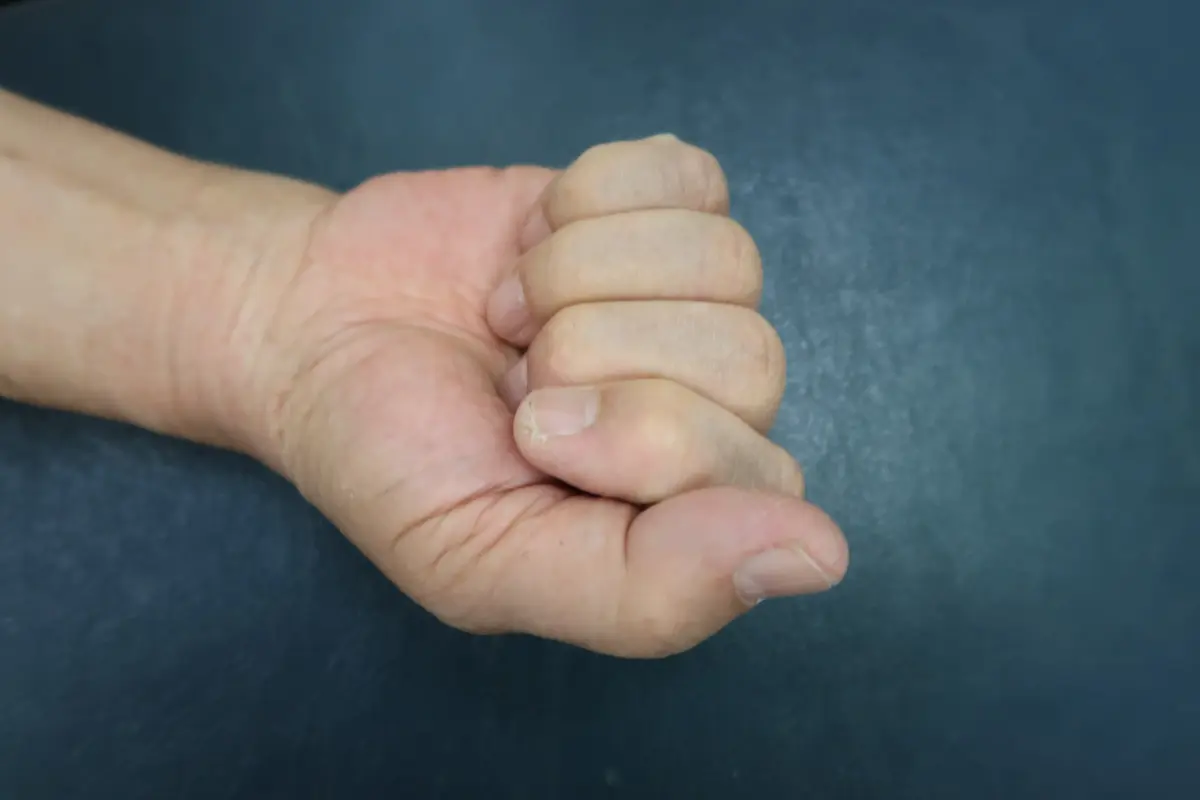
Later photographs show maintained active hand opening and fist formation. These images document visible follow-up function; the precise interval and longer-term clinical measurements were not supplied for this page.
Open right palm at follow-up
Follow-up extensionThe right ring finger remains aligned during hand opening.
Closed right fist at follow-up
Follow-up flexionComposite fist formation is maintained.
Patient showing both hands open at follow-up
Both hands openThe treated ring finger follows the digital cascade.
Patient showing both fists at follow-up
Both hands flexedActive grip formation at follow-up.
Patient greeting with hands together at follow-up
Patient at follow-upThe clinical series concludes with maintained functional movement.
Patient demonstrating both hands together after successful right ring trigger-finger treatment
Overall appearance after treatmentThe ring finger now aligns with the opposite hand, allowing direct comparison with the preoperative photograph above.
Teaching summary

Lessons for patients and surgeons

Severe locking deserves timely assessment. Treatment should address the demonstrated mechanical obstruction while protecting the flexor tendon, digital nerves and the pulley structures needed for normal biomechanics.

A

Motion defines severity

Video demonstrates fixed locking and loss of coordinated opening better than resting posture alone.

B

Completeness must be tested

Tactile findings, passive glide and active patient movement provide complementary checks.

C

Early result is not the whole story

Immediate restoration should be followed by wound care, graded use and clinical review.

“The Blade Probe divides the obstructing pulley tissue; tactile checking and active movement confirm whether tendon glide has been restored.”Vijitpornkul Blade Probe teaching principle

Clinical references

  1. AAOS OrthoInfo: Trigger Finger
  2. NCBI Bookshelf: Trigger Finger

For education only. This page presents one patient’s case with permission. Photographs and videos cannot establish a diagnosis, describe every technical detail, or predict another patient’s outcome. Treatment decisions require examination by a qualified clinician.